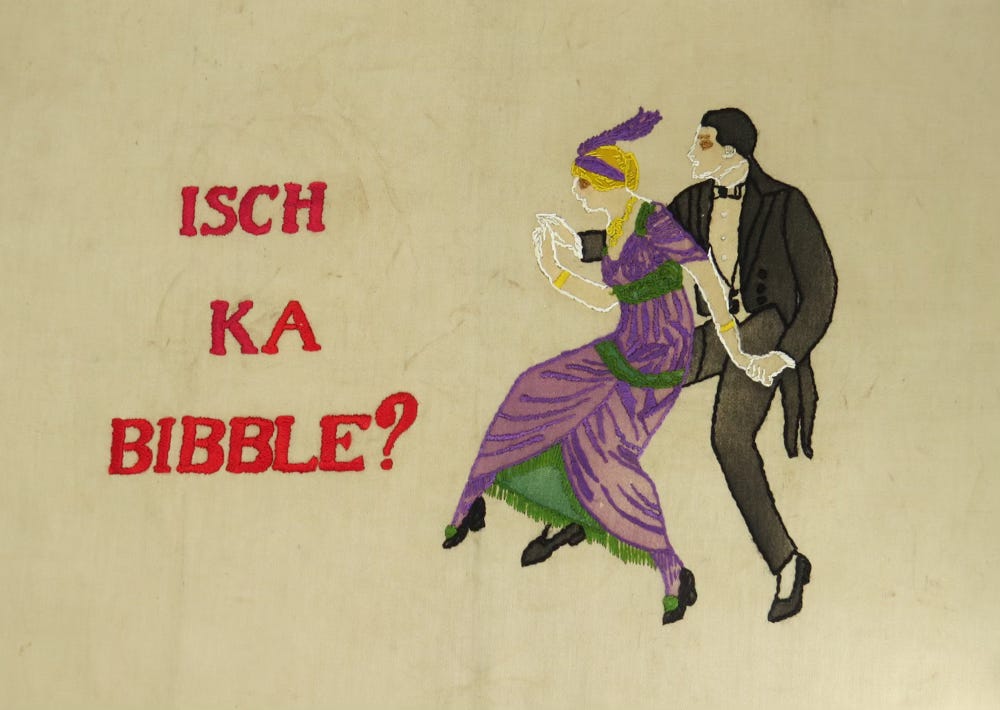
Isch Ka Bibble
Silly slang helps date fine embroidery

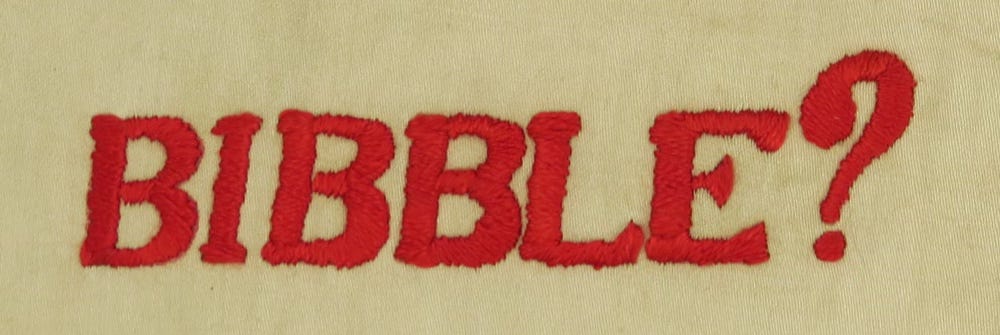
The New York Times ran an interesting article a few days ago, with linguist Sam Corbin speculating on why youngsters are adopting words their grandparents used back in the day. One of the reasons: Some words are just fun to say.
So, here’s a phrase that’s fun – “Isch Ka Bibble.”
Why bring back that particular phrase?
How ‘bout, not least, because I have a very old pillow embroidered with the words?
Isch ka bibble. There’s general agreement that the words mean “I should worry?” Spellings vary, usually for the first word, with some sources printing “isch” and others using “ish.” For many years, people assumed that “isch ka bibble” is a Yiddish phrase, but the Jewish Standard Times of Israel calls it “mock Yiddish,” so we don’t really know where the phrase originated.
The pillow has been packed away for many years, but when I unearthed it recently while doing an archaeological dig through the bins of textiles, it started jingling faint little bells in my memory. Someone sometime ago said those words to us kids.
The first several hits on an internet search led to a 1940s big band conducted by Kay Kiser, the “Kollege of Musical Knowledge.” Broadcast by NBC Radio from 1939 to 1949, Kiser’s cast of characters included “this crazy guy on the show called Ish Kabibble,” remembered Mother when I asked her why I remembered the phrase from my childhood. “I remember we waited to hear Ish Kabibble,” she said. “It was something you waited to hear.” Even the Jewish Standard credits the phrase to the Kay Kiser orchestra referring to Kiser’s daffy fall guy, Ish Kabibble.
But the pillow in my collection is much older, at least by twenty or twenty-five years. In the case of the Isch Ka Bibble pillow pattern, there are clues to help pinpoint in what decade the article was stitched.
It is a stamped design printed on crash linen. The style and colors were popular for needlework during the Art Nouveau period that spanned the end of the nineteenth and beginning of the early twentieth centuries. Along one edge is printed “Richardson’s Design No. 9004,” indicating it was issued by Richardson Silk Company of Chicago. The company was active in that time period, producing preprinted designs and a variety of colorfast specialty flosses that inspired needlewomen to beautify their homes. Richardson’s embroidery designs prioritized florals with intricate shading, but the company offered a few patterns that featured the tinting seen on this example. Richardson recommended that such patterns be outlined with “skeleton stitch’” -- what is now called an outline stitch.
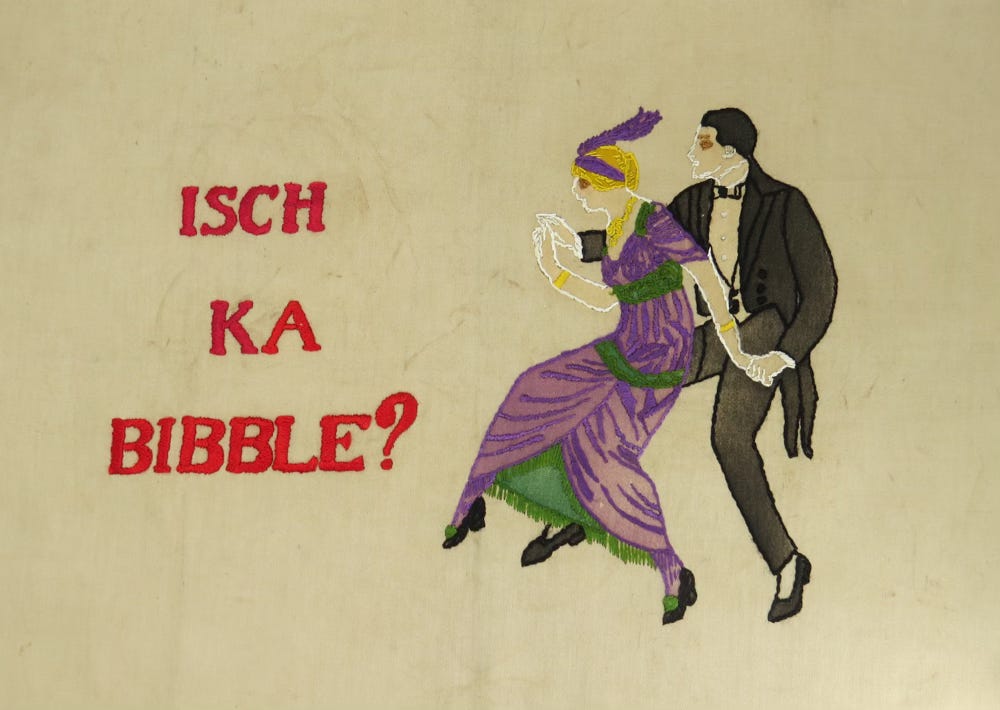
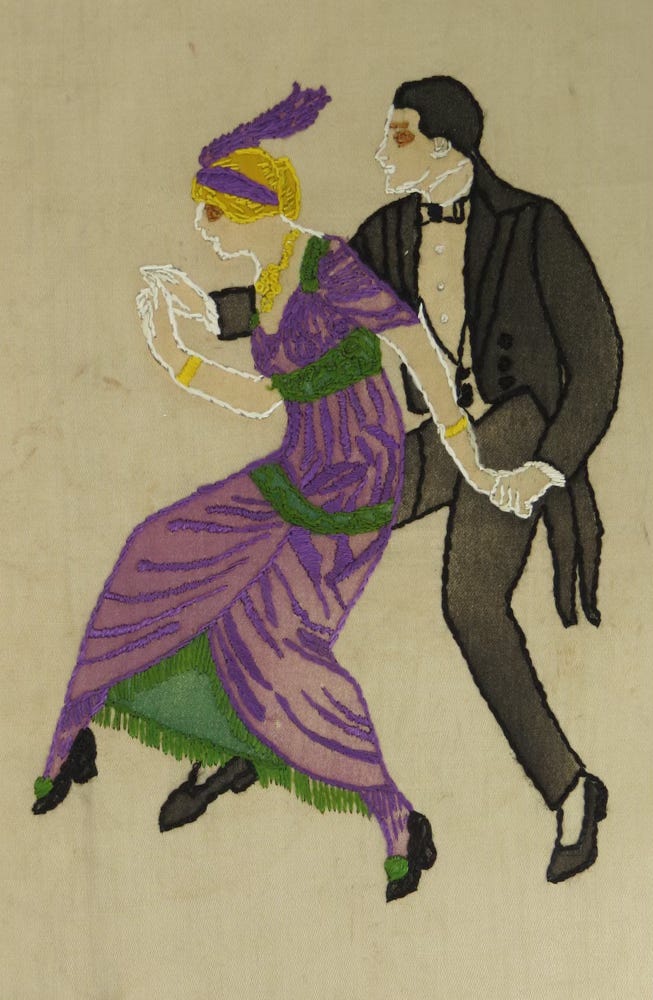
Another clue to the age of this embroidery sample are the costumes worn by the dancers. Clearly, the formal gown and tuxedo are not indicative of the austerity measures introduced for clothing during the Great Depression or the World War II eras. Notice, too, the sinuous elongated bodies, again indicative of Art Nouveau design styles.
The couple is shown engaged in an energetic dance, knees up, leaping off the floor. Might this have been a fox trot, which the Library of Dance noted was introduced about 1913?
Merwyn Bogue, who played Ish Kabibble for Kay Kiser’s “Kollege of Musical Knowledge,” admitted that his stage name came from an old song. The music and lyrics were written by George W. Meyer and Sam M. Lewis and first performed in 1913. (Where Meyer and Lewis first heard the phrase may forever be unknown.) Thus far, I’ve found two different recordings of the song; you can listen to it here. The jaunty tune repeats this chorus:
I never care or worry
Isch-ga-bibble, Isch ga-bibble,
I never tear or hurry,
Isch ga-bibble, Isch ga-bibble,
When a friend says “I’m feeling blue.”
When a friend says his room-rent’s due
Just tell him in a friendly way
“Get used to it, get used to it.”
When I owe people money,
Isch ga-bibble, Isch ga-bibble,
I should worry, No! not me.
In 1916, Mary Heaton Vorse complained to Woman’s Home Companion readers: “Chicken pox doesn’t poison the wellsprings of one’s existence like ‘Ish kabibble,’ and ‘I should worry!’ Do you think it’s any fun to bring up children to speak decent English, and then have their conversation strewed with phrases like that …?”
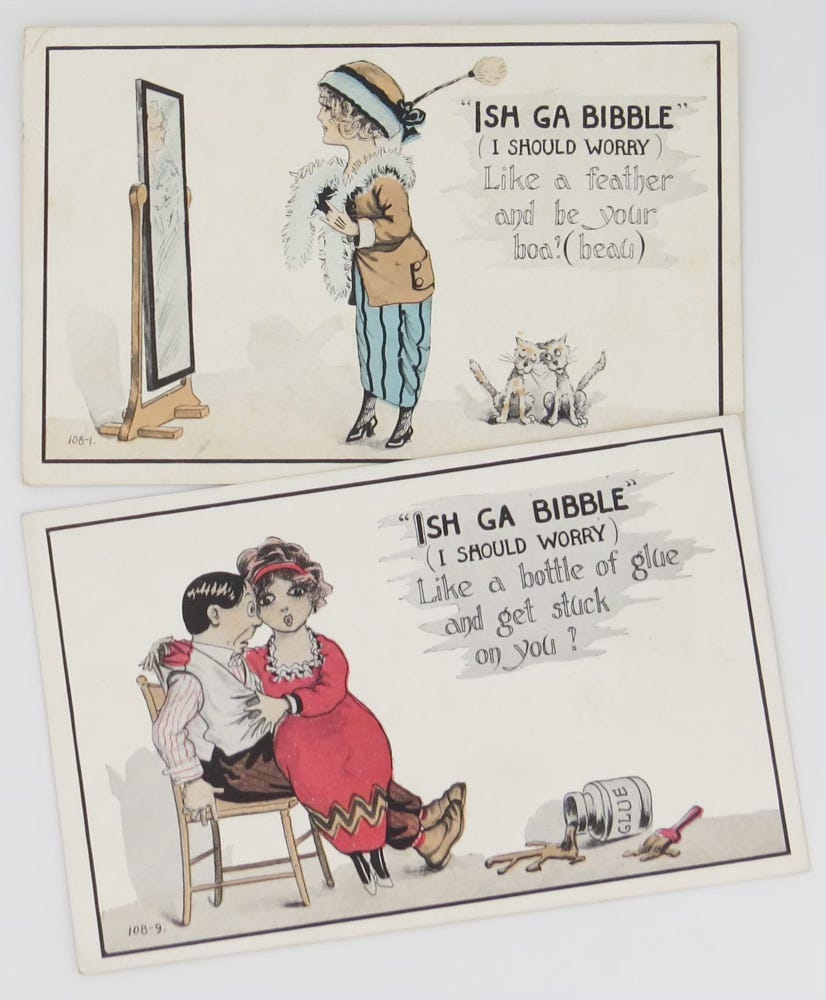
Chicken pox aside, between 1913 and 1920, folks had many reasons to dance away their worries. World War One had started in Europe, with the Russian Revolution following along. The latter brought about a Red Scare and our government began deporting immigrants deemed to be threats to American values. Labor strikes, suffrage demonstrations and race riots interrupted the tranquility of our communities. A worldwide influenza epidemic affected 25 percent of the US population; more than 675,000 Americans died of the disease. Bank failures were common, foreshadowing the Great Depression. Prohibition and income taxes were introduced with Constitutional amendments. Politics was rife with corruption and the rich got richer while the poor stayed poor.
Then as now, there was much in the world to worry couples who merely wanted a fulfilling life with security, good company, music, and fun. While repeating a mantra of “Isch Ka Bibble” won’t solve real-world problems, its alliterative syllables are fun. Since we’re dusting off archaic words, let’s bring back this silly phrase.
Isch ka bibble!