Cupid’s Wings A-Flutter
Stitch an antique valentine


With a whisper and a flutter, Cupid is fast approaching his day of days when we pause to celebrate love in its myriad forms. Do you feel a breeze of amour?
The Roman god of love, desire and affection was born to Venus after a liaison with Mars, the god of war. In antiquity, Cupid was depicted as a youth frequently doing things he ought not to do. He is pictured with wings to portray his passionate flightiness, with a bow and quiver full of arrows to symbolize the quick strike of infatuation, blindfolded because love is blind and irrational.
Shakespeare described Cupid’s personality in A Midsummer Night’s Dream:
Love looks not with the eyes, but with the mind
And therefore is winged Cupid painted blind.
Nor hath love's mind of any judgement taste;
Wings and no eyes figure unheedy haste.
And therefore is love said to be a child
Because in choice he is so oft beguiled.
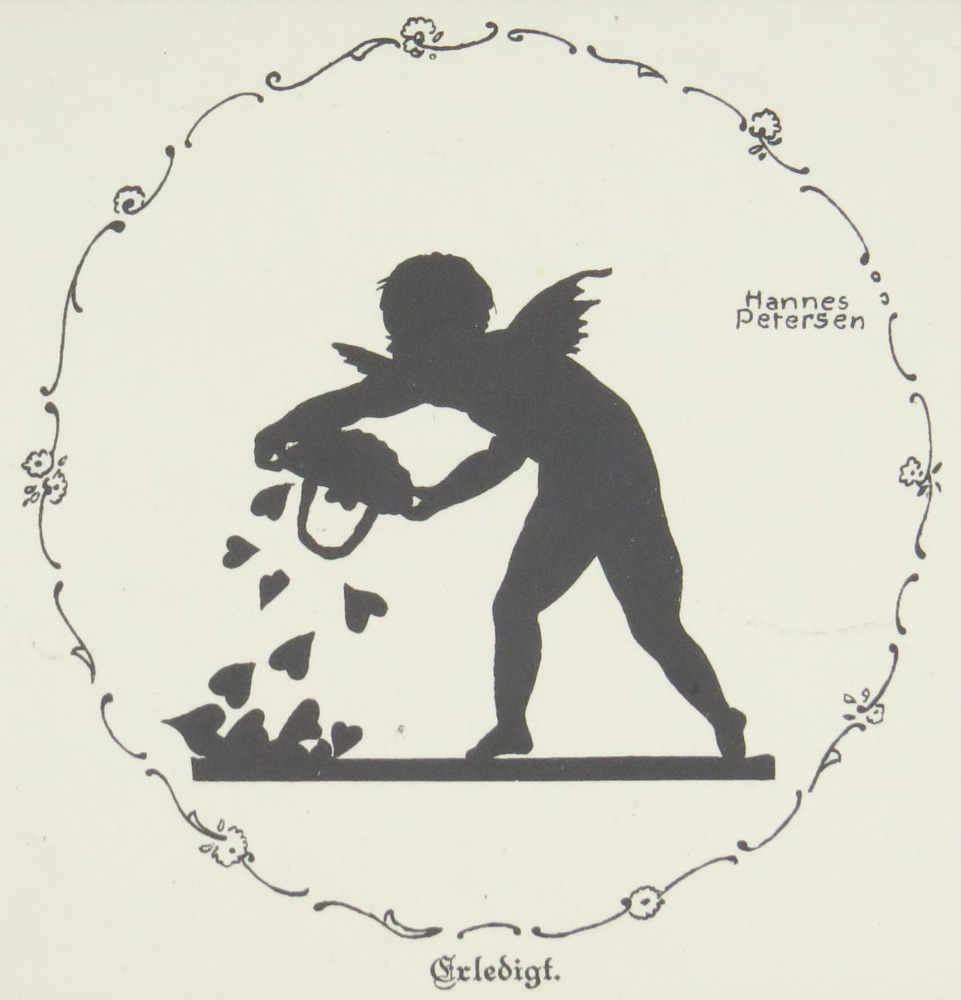
Long before medieval clergy labeled him a demon god, before the Victorians recast our notions of romance, artists began portraying the mischievous youth as babes with wings. No, no, not the Victoria Secret Angels, but rather as plump cherubs flitting about the heads and shoulders of dozing damsels and ardent squires. In these images, particularly Michelangelo’s sculpture “Sleeping Cupid” showing him as a toddler, Cupid is an innocent.
When he became the emblematic messenger of Valentine’s Day is an open question that gets tangled up with martyrology and a medieval belief that birds mated only in mid-February. University of Kansas professor Jack Oruch asserts that the “transformation of [Saint] Valentine into an auxiliary or parallel to Cupid as sponsor of lovers” was established by the 14th century.
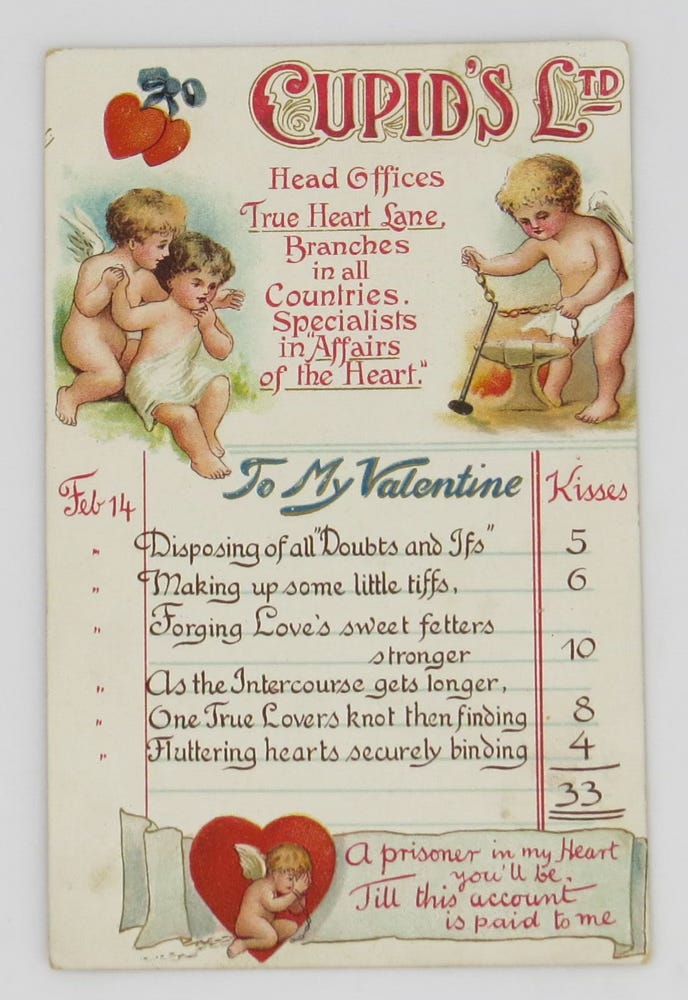
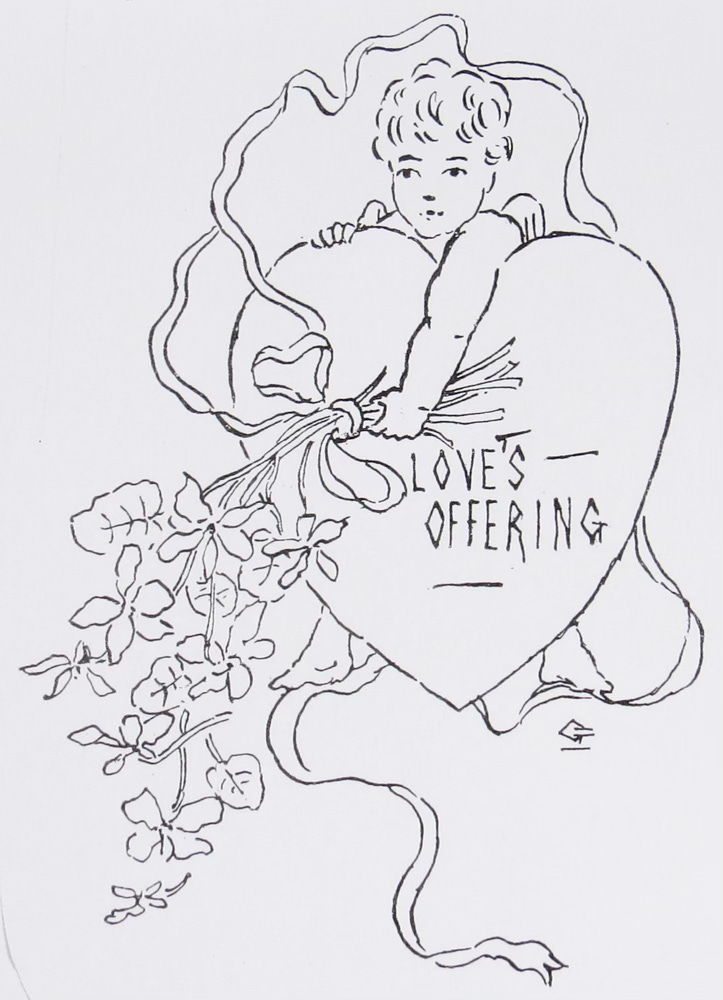
Edwardian makers of greeting cards could not commercially promote erotic love; thus Cupidic affection is rendered with more restraint and naivety. Such restraint can be seen in a “Valentine Souvenir” offered in the February 1896 issue of The Modern Priscilla.
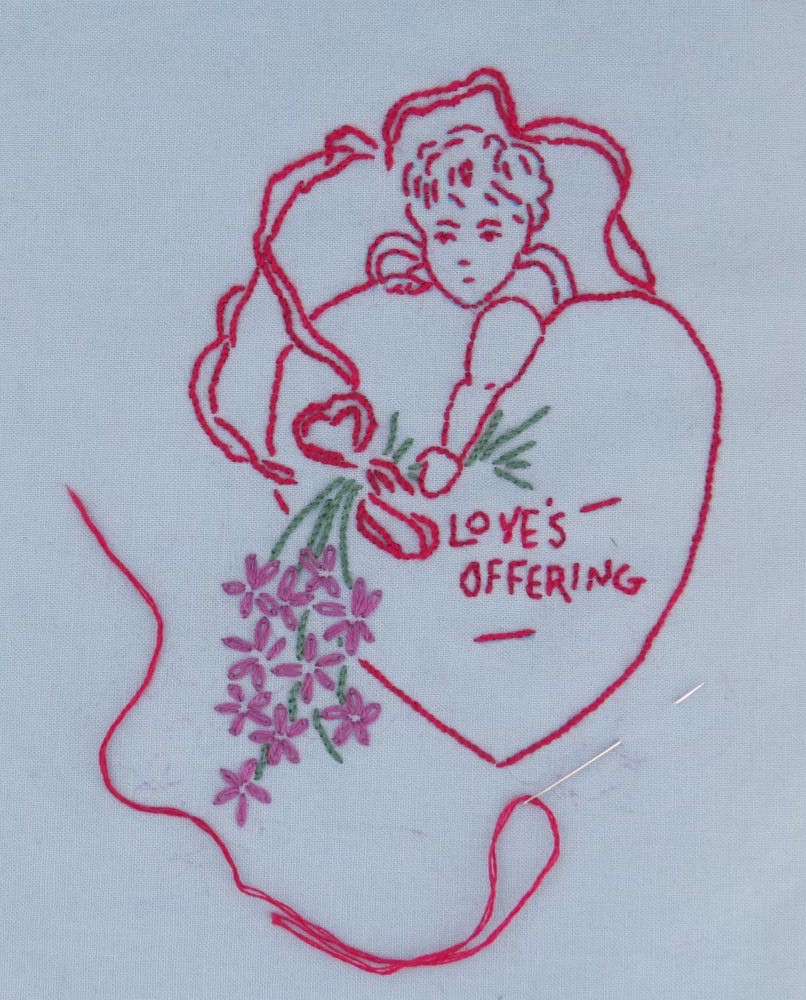
Imagined by an unknown artist, this Cupid gazes over the edge of a heart and offering a bouquet of violets to an unseen lover. The accompanying article suggests painting the image on cloth-covered cardboard as “a trifling gift” costing very little to make. The reader could then attach it to different gifts, such as shaving kits for the men in her life or a basket of food given to neighbors in need. I found that it is nicely suitable for red work embroidery.
This delightful design is a pattern worth repeating. Copy the photo below and enlarge or reduce the image to suit the size of your love. Whether you choose to paint or embroider your Cupid, this simple pattern can be rendered in time to present to your beloved on February 14.